 Image 1 of 1
March 22, 2027
John Hattie
ISBN 978-1506362946
Math
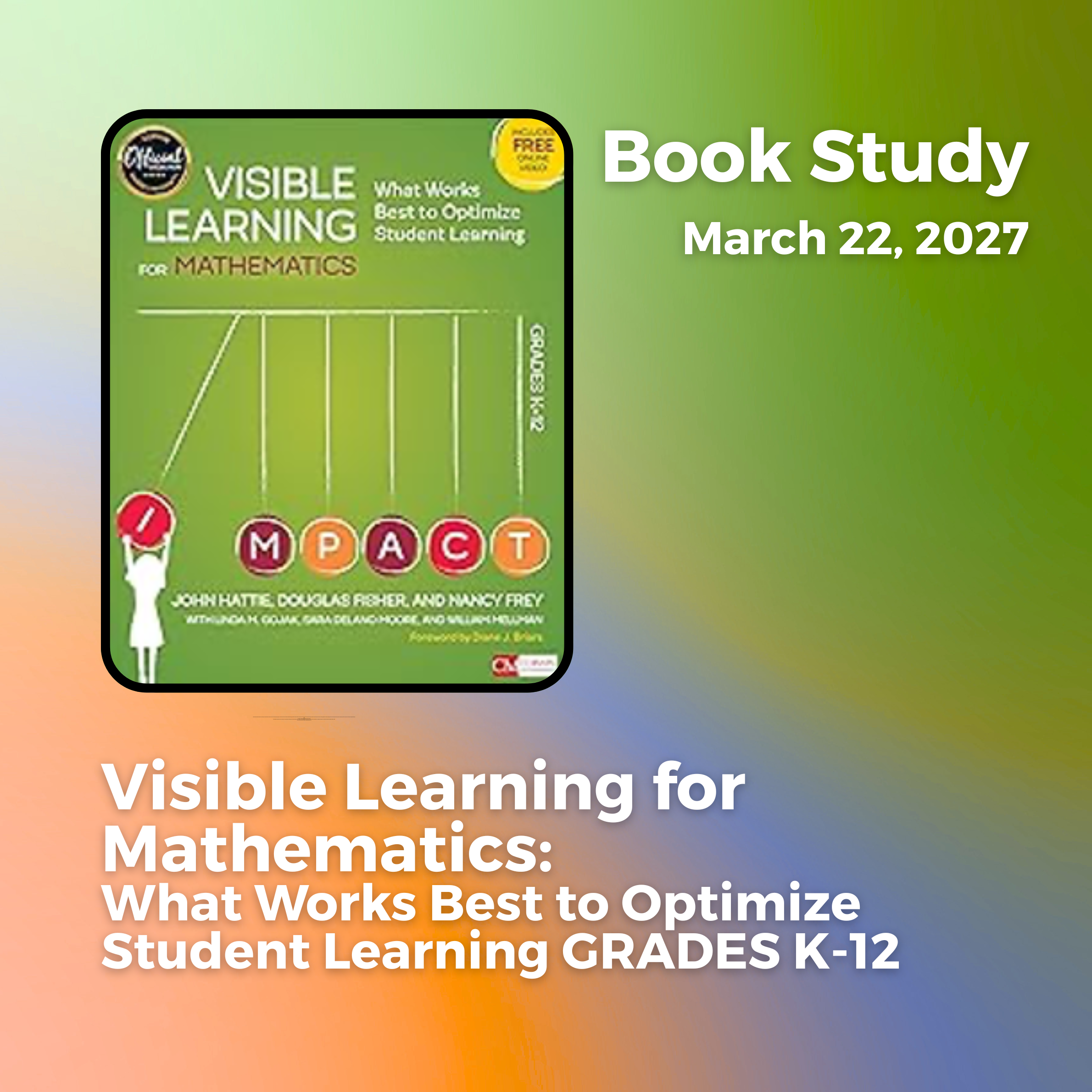
Rich tasks, collaborative work, number talks, problem based learning, direct instruction…with so many possible approaches, how do we know which ones work the best? In Visible Learning for Mathematics, six acclaimed educators assert it’s not about which one―it’s about when―and show you how to design high impact instruction so all students demonstrate more than a year’s worth of mathematics learning for a year spent in school.
That’s a high bar, but with the amazing K 12 framework here, you choose the right approach at the right time, depending upon where learners are within three phases of learning: surface, deep, and transfer. This results in "visible" learning because the
effect is tangible. The framework is forged out of current research in mathematics combined with John Hattie’s synthesis of more than 15 years of education research involving 300 million students.
Chapter by chapter, and equipped with video clips, planning tools, rubrics, and templates, you get the inside track on which instructional strategies to use at each phase of the learning cycle:
Surface learning phase: When―through carefully constructed experiences―students explore new concepts and make connections to procedural skills and vocabulary that give shape to developing conceptual understandings.
Deep learning phase: When―through the solving of rich high cognitive tasks and rigorous discussion―students make connections among conceptual ideas, form mathematical generalizations, and apply and practice procedural skills with fluency.
Transfer phase: When students can independently think through more complex mathematics, and can plan, investigate, and elaborate as they apply what they know to new mathematical situations.
To equip students for higher level mathematics learning, we have to be clear about where students are, where they need to go, and what it looks like when they get there. Visible Learning for Math brings about powerful, precision teaching for K 12 through intentionally designed guided, collaborative, and independent learning.
North Dakota United is dedicated to providing researched-based, member-driven, relevant, high-quality programs to advance skills, communication, and leadership opportunities. Book studies are typically one credit courses that last approximately six weeks. One credit equates to 15 hours of study. Expectations include reading the book, answering discussion questions, responding to others’ responses, and a reflection paper/action plan.
COST
Book studies are FREE to North Dakota United members.
All participants (members and non-members) are responsible for obtaining the book and the $50 credit fee to UND to have your credit recorded onto your transcript. The fee to participate in an NDU book study for non-members is $100, plus the $50 credit fee to UND.
If you have questions, please contact: amy.flicek@ndunited.org
March 22, 2027
John Hattie
ISBN 978-1506362946
Math
Rich tasks, collaborative work, number talks, problem based learning, direct instruction…with so many possible approaches, how do we know which ones work the best? In Visible Learning for Mathematics, six acclaimed educators assert it’s not about which one―it’s about when―and show you how to design high impact instruction so all students demonstrate more than a year’s worth of mathematics learning for a year spent in school.
That’s a high bar, but with the amazing K 12 framework here, you choose the right approach at the right time, depending upon where learners are within three phases of learning: surface, deep, and transfer. This results in "visible" learning because the
effect is tangible. The framework is forged out of current research in mathematics combined with John Hattie’s synthesis of more than 15 years of education research involving 300 million students.
Chapter by chapter, and equipped with video clips, planning tools, rubrics, and templates, you get the inside track on which instructional strategies to use at each phase of the learning cycle:
Surface learning phase: When―through carefully constructed experiences―students explore new concepts and make connections to procedural skills and vocabulary that give shape to developing conceptual understandings.
Deep learning phase: When―through the solving of rich high cognitive tasks and rigorous discussion―students make connections among conceptual ideas, form mathematical generalizations, and apply and practice procedural skills with fluency.
Transfer phase: When students can independently think through more complex mathematics, and can plan, investigate, and elaborate as they apply what they know to new mathematical situations.
To equip students for higher level mathematics learning, we have to be clear about where students are, where they need to go, and what it looks like when they get there. Visible Learning for Math brings about powerful, precision teaching for K 12 through intentionally designed guided, collaborative, and independent learning.
North Dakota United is dedicated to providing researched-based, member-driven, relevant, high-quality programs to advance skills, communication, and leadership opportunities. Book studies are typically one credit courses that last approximately six weeks. One credit equates to 15 hours of study. Expectations include reading the book, answering discussion questions, responding to others’ responses, and a reflection paper/action plan.
COST
Book studies are FREE to North Dakota United members.
All participants (members and non-members) are responsible for obtaining the book and the $50 credit fee to UND to have your credit recorded onto your transcript. The fee to participate in an NDU book study for non-members is $100, plus the $50 credit fee to UND.
If you have questions, please contact: amy.flicek@ndunited.org